


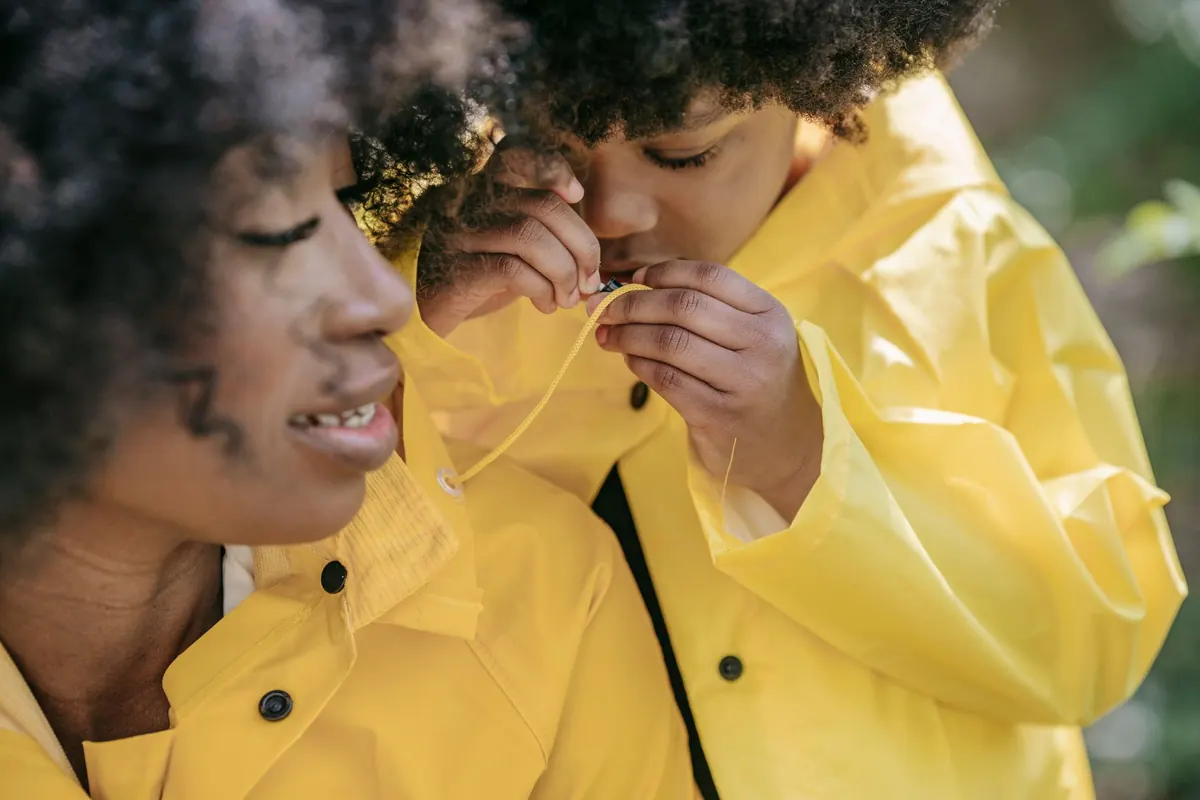
Kids Rainwear Layering Guide: Keeping Children Warm and Dry Without Bulk
Puddle jumping is a full-contact sport, and the right outfit lets a child play it properly. Trouble usually starts when rainwear gets treated as one item: a single thick coat that is stiff, heavy, and steamy by the time a child has run to the end of the street. Layering fixes that. Three thin, well-chosen layers beat one padded suit almost every time, and they are far easier to adjust when the sky changes its mind halfway through a walk.
Why Layering Beats One Thick Coat
Think of a child's warmth as a dial you want to turn up or down during the day. A single bulky coat only has two settings: on and off. When it is on, running, scooting and climbing generate heat that has nowhere to go, so the inside of the coat turns damp. Damp insulation stops insulating, and the child ends up colder than if they had worn less in the first place.
Layers give you options. A base layer manages sweat, a mid layer holds warmth, and a waterproof shell keeps rain out. If the sun appears, the shell comes off and the mid layer stays. If the wind picks up, everything goes back on. Layered kits also tend to last longer, because a shell that fits over a fleece in October still fits over a jumper in February. And when one piece wears out, you replace one piece, not the whole outfit.
Start With the Base Layer
The layer touching the skin has one job: move moisture away from the body. Cotton is the wrong choice here. It soaks up sweat, holds it, and then chills the child once they slow down. Look for polyester, a polyester blend, or merino wool, which stays warm even when slightly damp.
A long-sleeve top and leggings are enough. The base does not need to be thick or fluffy, and it should not be so tight that it restricts movement or so loose that it bunches under everything else. Flat seams and tag-free necks matter more than most parents expect, especially for children who complain about scratchy clothes.
Base layer notes by age
- Babies and toddlers: a soft bodysuit or leggings set prevents gaps at the waist when they are being carried or crawling.
- Preschoolers: choose easy neck openings, because they will want to dress themselves and get frustrated by tight collars.
- School-age children: keep a spare base layer in the school bag. A dry top after a wet lunchtime makes the afternoon much easier.
Add a Mid Layer for Warmth
The mid layer traps warm air. Thin fleece, a lightweight puffer, or a fine wool jumper all do the job. Fleece is the most forgiving option for rainwear because it dries quickly, packs down small, and keeps some warmth even when it feels slightly clammy.
Two thin mid layers are warmer and more flexible than one thick one. They also let a child move their arms properly, which matters when they are climbing a fence or pedalling a bike. Check the wrists and ankles: mid layers that flare out will crumple uncomfortably inside a waterproof shell. If your child's coat has a zip-in fleece liner, that liner counts as the mid layer, so dress accordingly underneath.
Choose the Outer Layer Carefully
The shell is the piece that actually keeps rain out, so it deserves the closest look. You want a fabric labelled waterproof rather than water-resistant, taped seams, a hood that stays up in wind, elasticated or adjustable cuffs, and a hem that sits low enough to cover the top of the trousers.
Breathability is worth paying attention to for active children. A shell that blocks rain but traps every bit of body heat will leave a child damp from the inside, which feels worse than a little rain. Reflective piping or panels are a genuine safety feature on dark winter afternoons, not a decorative extra.
Fit checks to do in the shop or at home
- Arms stretched forward: the cuffs still cover the wrists.
- Arms raised overhead: the hem does not ride up above the waistband.
- Sitting cross-legged on the floor: no tight pulling across the shoulders.
- Zipped up over the mid layer: you can slide a hand underneath, but there is not a large gap.
- Hood up over a hat: it does not slide forward over the eyes.
Boots, Hats, Gloves and the Small Extras
Rubber boots are the simplest answer for wet pavements and puddles, but the fit matters. Boots that are too big cause tripping and let the foot slide, which rubs and turns cold. A removable liner dries faster overnight, and a deep tread helps on wet leaves and muddy paths. Pair wellies with wool or synthetic socks, never cotton ones that hold water.
Wellies are not walking boots, so for a longer family hike, waterproof shoes or boots with wool socks will be more comfortable. For hands, mittens are easier for younger children to get on and warmer than fingered gloves of the same weight. A thin hat fits neatly under most hoods without pushing them up, and a neck gaiter seals the gap between collar and chin. Pack one spare pair of socks for every outing. It sounds excessive until the first time a child finds a puddle deeper than their boot.
Three Ready-Made Layer Setups
- Mild drizzle, around 12 to 15°C: synthetic base layer, light fleece, packable waterproof shell, wellies with ordinary socks.
- Steady rain, around 5 to 10°C: thermal base top and leggings, fleece, waterproof shell, wellies with wool socks, hat and mittens.
- Cold sleet or near freezing: thermal base, thin fleece, insulated waterproof coat, or a shell worn over a lightweight puffer. Add a spare pair of mittens.
Before You Head Out the Door
Dress in order, base first, then mid, then shell, and have your child do the squat-and-reach test before the zip goes up. Tuck the base layer into the trousers so it does not ride up, and pull the shell hem down over the waistband. Slip a dry top, socks and mittens into a small bag for the car or the bottom of the pram.
Then watch how your child behaves rather than how the outfit looks. A child who is overheating will slow down, complain, or try to pull the hood off. A child who is getting cold goes quiet and hunched. Open a zip, remove a mid layer, or head home for dry clothes. If a child is shivering hard, unusually drowsy, or cold and pale despite dry layers, get them out of wet clothing and into warmth, and seek medical advice rather than waiting to see how it goes.
Photo: johnnpas / Pixabay